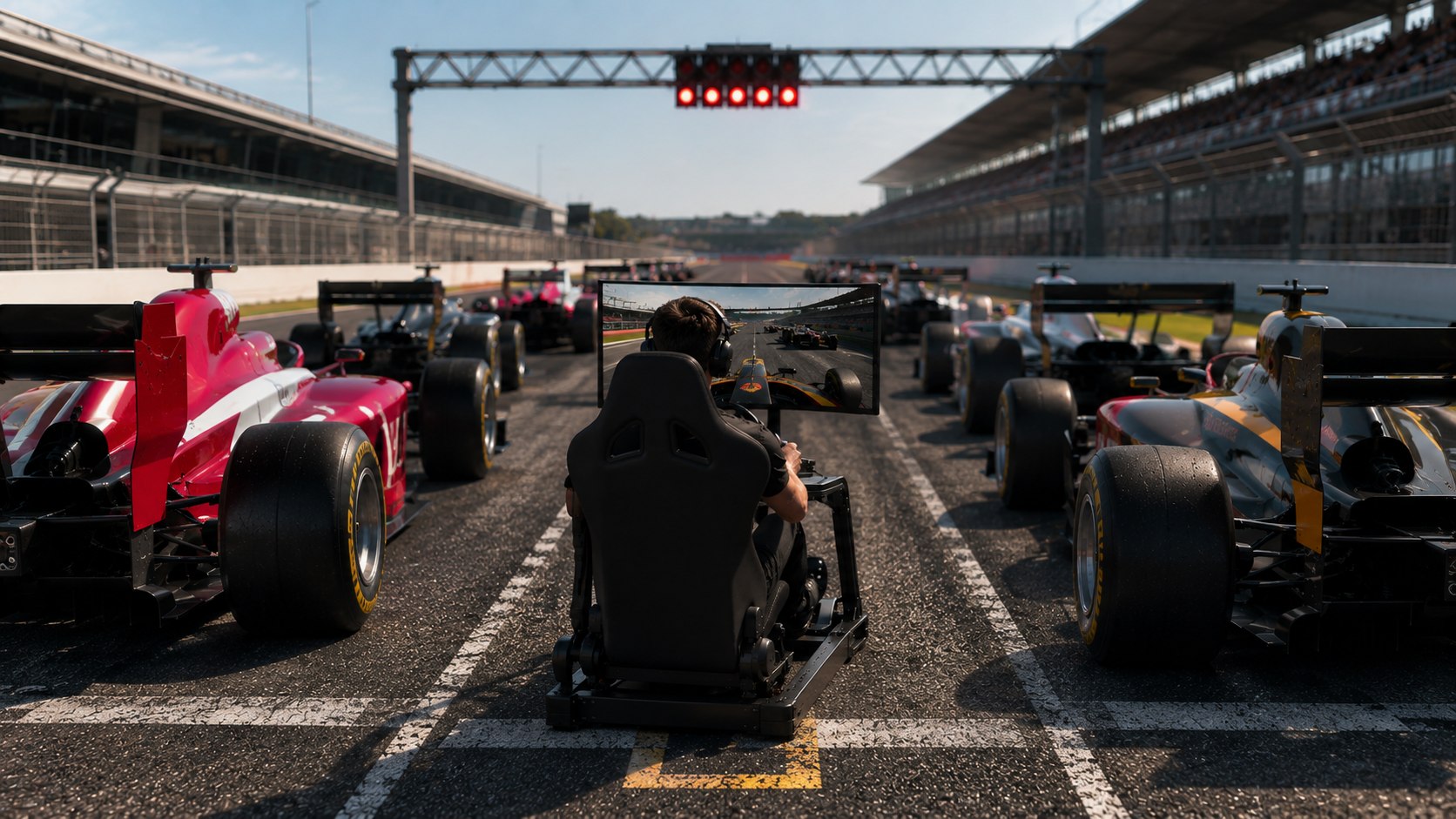
You can plan a business into existence on paper in a single afternoon. Name it, price it, sketch the customer, fill in the numbers, and there it is, complete and gleaming, a company that has never met a customer and never will. Planning a business is the easy part. Building one is not, and the gap between the two is where most founders get lost.
Here is the paradox that traps them. If you do not know where you are headed, how will you ever know when you arrive? So you plan, and you are right to. But if all you ever do is plan, you never leave the driveway. The map gets more detailed in the simulation world you created, but your car never actually moves. Both of those are real paths to failure, and a lot of founders are headed down one of them as you read this.
The two ways to fail
The first founder never leaves the driveway. Their business plan is a work of art: a competitive analysis, a five-year forecast, a color-coded roadmap, a name tested on everyone they know. Eight months in, it is still not quite ready to show a real customer, and it never will be, because polishing the plan feels safer than actually testing it. This time next year, they will still be planning.
The second founder never stops moving and never arrives. No plans, no patience for them, just build, post, launch, pivot, and chase every idea the moment it lands. Harder-working than anyone you know, and going in circles, because nothing points the effort anywhere. A year of frantic motion produces a pile of half-finished things and no business. They mistake lots of activity for progress.
Both of them fail, and they fail for opposite reasons. That is the whole lesson. A plan with no action goes nowhere. Action with no plan goes everywhere, which turns out to be the same place. A real business lives on the narrow road between them, and that is where the third founder drives.
Renee plans just enough to know where she is going, then she leaves the driveway and starts moving, correcting the route as the road reveals itself. She is not the sharpest planner of the three and not the hardest worker. She is the one who does both, a little at a time, in a loop, and she is the only one of the three who ends the year with a real business.
The case for planning, made honestly
Planning is not optional, and anyone who tells you to skip it and just wing it is selling something. A plan is how you decide who you serve, what you charge, and what you will ignore. It is how you dodge the most expensive mistake in business, which is pouring months of work in a direction nobody wanted. If you cannot picture the destination, you will not recognize it when you reach it, and you will chase every shiny turn along the way.
A plan gives your work a target. It turns a hundred possible next moves into a few that matter, and it lets you tell, at the end of a hard week, whether you actually got closer to something or just stayed busy. That clarity is worth real time to build.
But notice the word direction. You do not need a finished, five-year, everything-answered plan before you move. You need to know, roughly, where you are headed and what winning looks like in the near term. That much planning is essential. Past it, more planning stops adding direction and starts adding delay. The extra tab, the tenth revision, the flawless forecast for a business that does not exist yet, none of it makes your aim truer. It just keeps you in the driveway a while longer, and it feels productive the whole time. Plan enough to aim. Then go.
Why the plan is the easy part
A plan, sitting there, has never earned a dollar, served a customer, or taught you one true thing about your business. It cannot, because a plan is a guess about a world it has not touched yet. Everything you wrote down is a hypothesis, and a hypothesis is worth only what a test makes it worth.
The magic, all of it, lives on the other side of action. The first customer who says yes. The one who says no and tells you why. The price that holds, or does not. The feature nobody uses and the offhand request that becomes your whole business. None of that is in the plan. It is out in the world, and the only way to reach it is to actually do something. Founders who fall in love with their plan are, without realizing it, avoiding the very thing that would make them real.
The real enemy is chaos
Here is what nobody puts in the brochure. Running a business, especially starting or growing one, is chaos. It is a phone that will not stop, a dozen half-finished things, a to-do list that grows faster than you can clear it, and no obvious answer to the plain question of what to do right now. The plan told you where you were going. It said nothing about which of the fourteen things screaming for your attention this morning actually gets you there, and it has no answers at all when reality turns out different from what you planned for, which is always.
Picture a Tuesday. You meant to work on the thing that grows the business: the offer, the outreach, the product. Instead a customer emails a problem, a supplier needs an answer, the website breaks, an invoice has to go out, and a promising lead from last week finally replies and needs handling right now. By evening you have worked nine hours, put out eight small fires, and moved the actual business exactly nowhere. That is not a bad day. For a lot of founders, that is every day, and it is how a year disappears with nothing to show for it.
No honest look at planning and action can skip the hustle culture. People in it do sometimes succeed, but without any planning those wins tend to be more accidental than intentional. Throw enough at a wall and a few things stick, but you wear out yourself and your bank account getting there.
That chaos is where businesses quietly die. Not from a shortage of ideas, and not from one dramatic failure, but from scattered effort that never adds up. In studies of why companies fail, most famously the running tally kept by CB Insights, running out of money sits near the top, and right beside it sit losing focus and building something the market never wanted. There is an old line that lack of focus kills as many businesses as lack of capital, and the numbers give it teeth. Wasted effort, work aimed the wrong way, weeks that vanish into busyness, a founder too tired to say what they actually accomplished. A plan does not save you from any of that. Managing the chaos does.
Planning and action need each other
So which is it, plan or act? The question is a trap, because the two are not rivals. They are two halves of one engine.
Direction makes action efficient, because your effort lands somewhere instead of everywhere. Action makes direction honest, because the real world answers back and turns your guesses into facts. You take a step, the market responds, you learn something the plan never could have told you, and you adjust and step again. Around and around. Renee does not out-plan or out-hustle anyone. She sets a direction, ships the next real thing, listens hard to what comes back, and adjusts. That loop, run a few hundred times, is what a business actually is. If you do not know where you are headed, you wander. If you never leave, you never arrive. The way through is to hold both at once and keep the loop turning.
What we actually do
This is worth being clear about, because it is easy to get wrong. Yes, PushStartGo will help you build a plan, and yes, it uses AI to make that fast. But the plan is the doorway, not the house. It is the jumping-off point, the easy part, the thing that gets you pointed in a direction so the real work can begin.
It is worth naming what PushStartGo is not, because there are plenty of new tools that will build you an app, spin up a website, or handle one slice of your business in an afternoon. Those can be genuinely useful, but a slice is not the whole. An app built to spec without being thought through can miss its market entirely, and even a great app is a revenue driver, not a business. A business is the customers, the money, the operations, the direction, and the hundred daily decisions that hold it all together.
The real work is everything after the plan. PushStartGo takes the plan you make and turns it into a project: a prioritized list of concrete next steps, so that on any given morning, in the middle of the chaos, you always know the one thing to do next. It gives the mess a shape you can move through. On that same chaotic Tuesday, instead of nine hours of fires and no progress, you handle what genuinely cannot wait and then see, in one place, the two or three steps that actually move the business, already sorted by what matters most. The fires still happen. They just stop being the entire day. The doing feeds the plan and the plan steers the doing, so the two stay in step instead of drifting apart.
That is the point of the whole thing. Not to write you a business plan, but to help you build and run the business that plan was only ever a sketch of. It is one place to manage the chaos and decide your next moves, work on your financials, learn in the education center, and find the right person for a role you cannot fill yourself. This is where planning meets preparation and action.
Stop planning your way to a business
You will not find your business in the plan. You will find a good guess about it, which is worth having, and then you have to go get the real thing, which lives outside, in the doing, in the mess, among the customers who have never read your document and never will.
So plan enough to know your direction, and then leave the driveway. Take the step. Let the world answer. Adjust and step again. The magic was never going to be in the planning. It was always going to be in the building, and the founders who understand that are the ones still standing when the careful planners are still deciding.
This holds no matter what you are building. Whether your business lives entirely in software or runs on a truck and a mower, and whether you are still dreaming about starting one or already deep in running it, the job is the same: turn the plan into action, organize the chaos, and get to the next level. That is what we are here for.
A plan is a promise you make to yourself on paper. A built business is that promise kept out in the world, and nobody has ever kept it from the driveway. What closes the distance between the two is movement, plain and simple, and no forecast has ever produced it. When you are ready to turn your plan into the next real move, PushStartGo turns it into a project you can actually build.