A business plan is really just the right questions, answered honestly. The trouble is that a blank template makes those questions feel like a forty-page exam, so most people never start. PushStartGo takes the exam away. It asks you a handful of plain questions, in normal words, and turns your answers into a real, usable plan in about a minute. Then, and this is the part that matters, it turns that plan into a project you can actually build.
This is a walk through exactly what that looks like, screen by screen, so you know what to expect before you begin. If you would rather just try it, you can open the venture wizard and follow along.
Before you start
You do not need anything prepared to begin, which is part of the point. No documents, no research folder, no finished idea, just the rough shape of what you want to build and about five minutes. Every question is written in plain language, and none of it assumes you have started a business before.
You might wonder why a set of questions beats a good template. A blank template asks you to know the format of a business plan, the order of the sections, and the language investors expect, none of which has anything to do with whether your idea is any good. It puts the hard, unimportant part first. The wizard flips that around. It asks only about the things that actually matter, your customer, your problem, your edge, and your numbers, and it handles the format for you, so you spend your energy on the business instead of on formatting a document about it.
Step one: pick what you are building
The wizard opens by asking what kind of business you have in mind, because the questions that follow are tuned to the answer. A software product, a local shop, a service, a marketplace, and a handful of other types each get a few questions that actually fit their world.
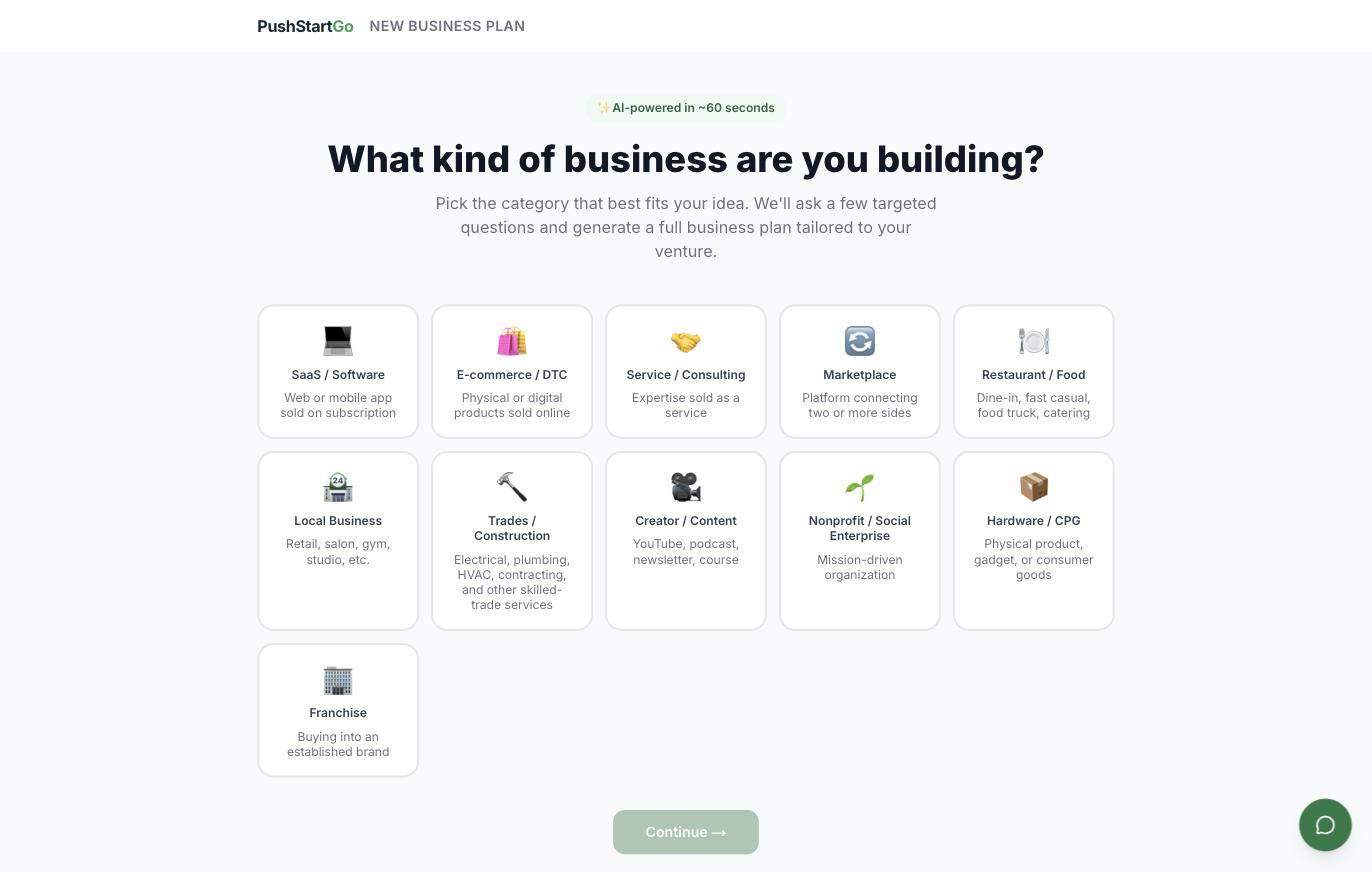
Pick the one closest to your idea and keep moving. You are not locked in, and you are not being graded. This choice just makes sure that a coffee shop is not asked about monthly software pricing and a software product is not asked about foot traffic. If none of the types feels like a perfect match, pick the closest one. The plan adapts to your specific answers in the steps that follow, so the category is a starting frame, not a box you are stuck in.
Step two: the basics
The first real questions are the ones every business has to answer, no matter the type. What is your business called, what is your one-sentence pitch, and what problem are you solving.
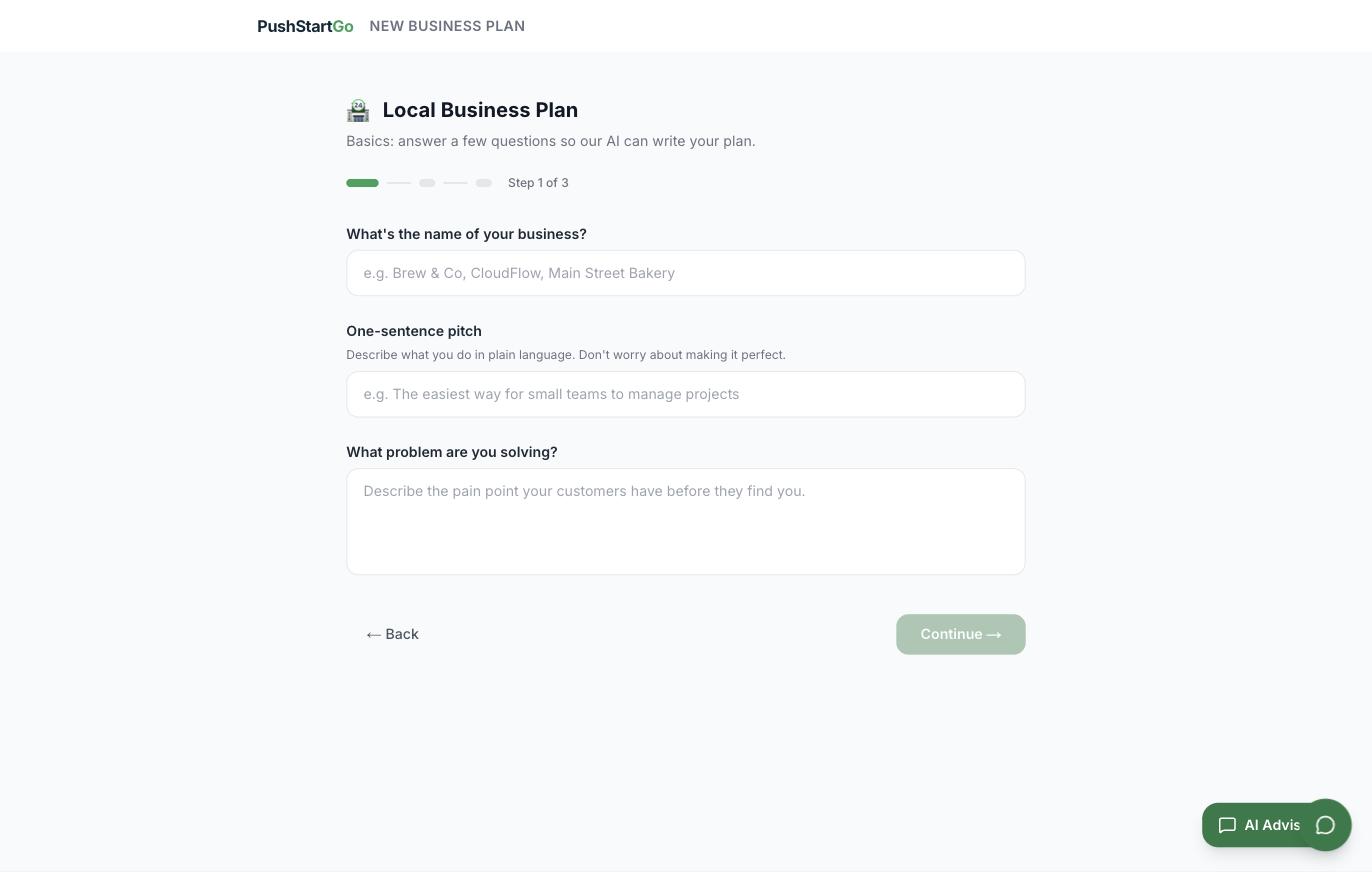
Do not overthink the name, and do not agonize over the pitch. Write it in plain language. The pitch, in particular, is the hardest line in any plan, and it is usually the last thing you truly nail, so a rough version now is exactly right. Describe the problem in the words your customer would use, not in the language of your solution. These three answers are the spine of the whole plan, and the wizard uses them to shape everything that follows.
Step three: your ground
Next the wizard asks about the ground you are standing on: who your ideal customer is, where you are right now, who is on your founding team, and where you plan to operate. Depending on the type of business you picked, it also asks a question or two specific to your world, like what sort of local business you are running.
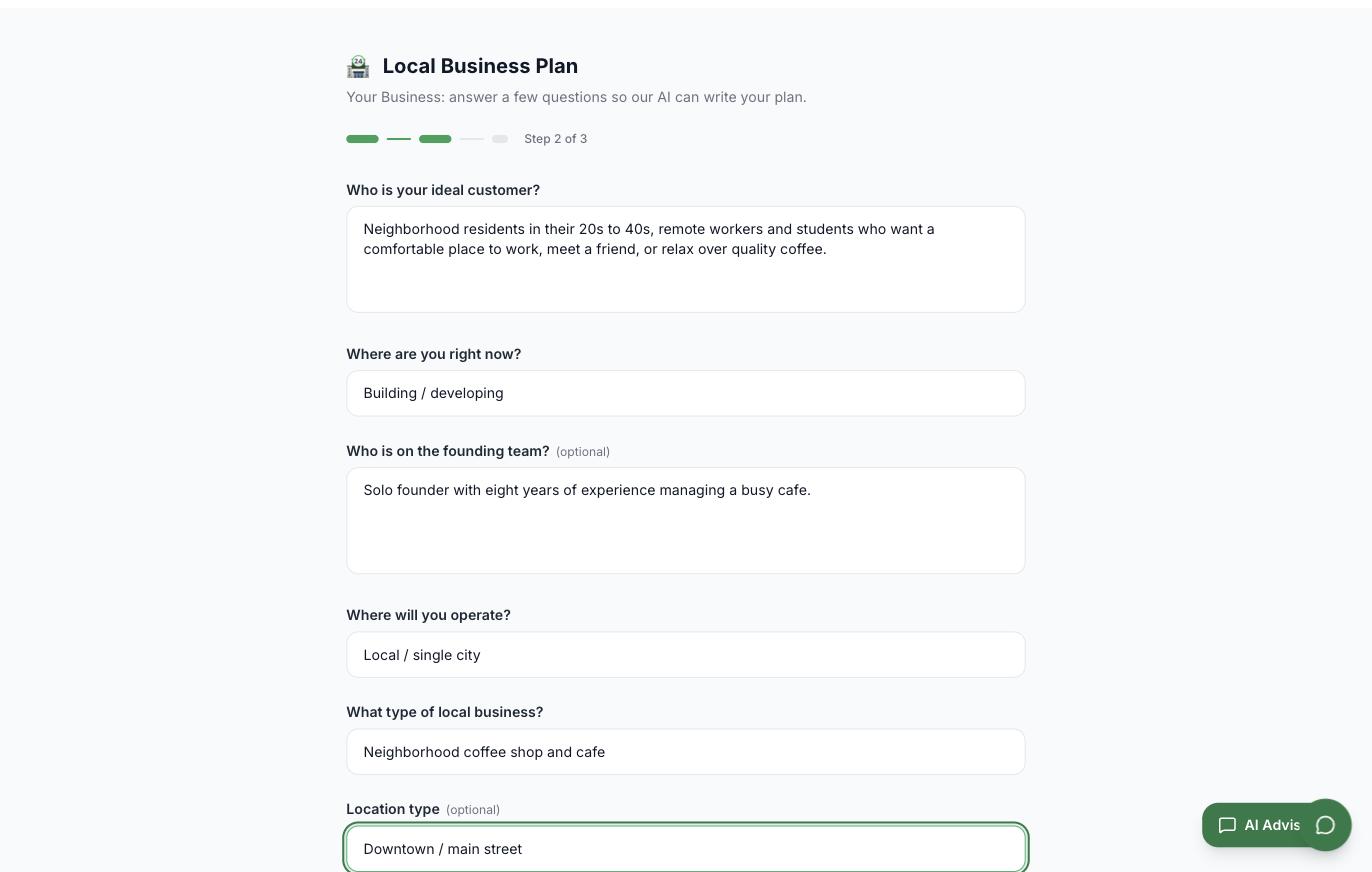
Be as specific as you can, especially about the customer. "Small business owners" is too broad to be useful, while "solo consultants who hate spreadsheets" is a person the plan can actually speak to. Being honest about your stage matters too, because a plan for someone still validating an idea should point in a different direction than a plan for someone already earning revenue. The founding team question is optional, and solo is a perfectly good answer.
Step four: your edge, then generate
The last set of questions is about what sets you apart and what stands in your way: your edge over the alternatives, your biggest challenge right now, and a couple of details about how you make money. Once those are in, the wizard tells you that you are ready and hands you a single button.
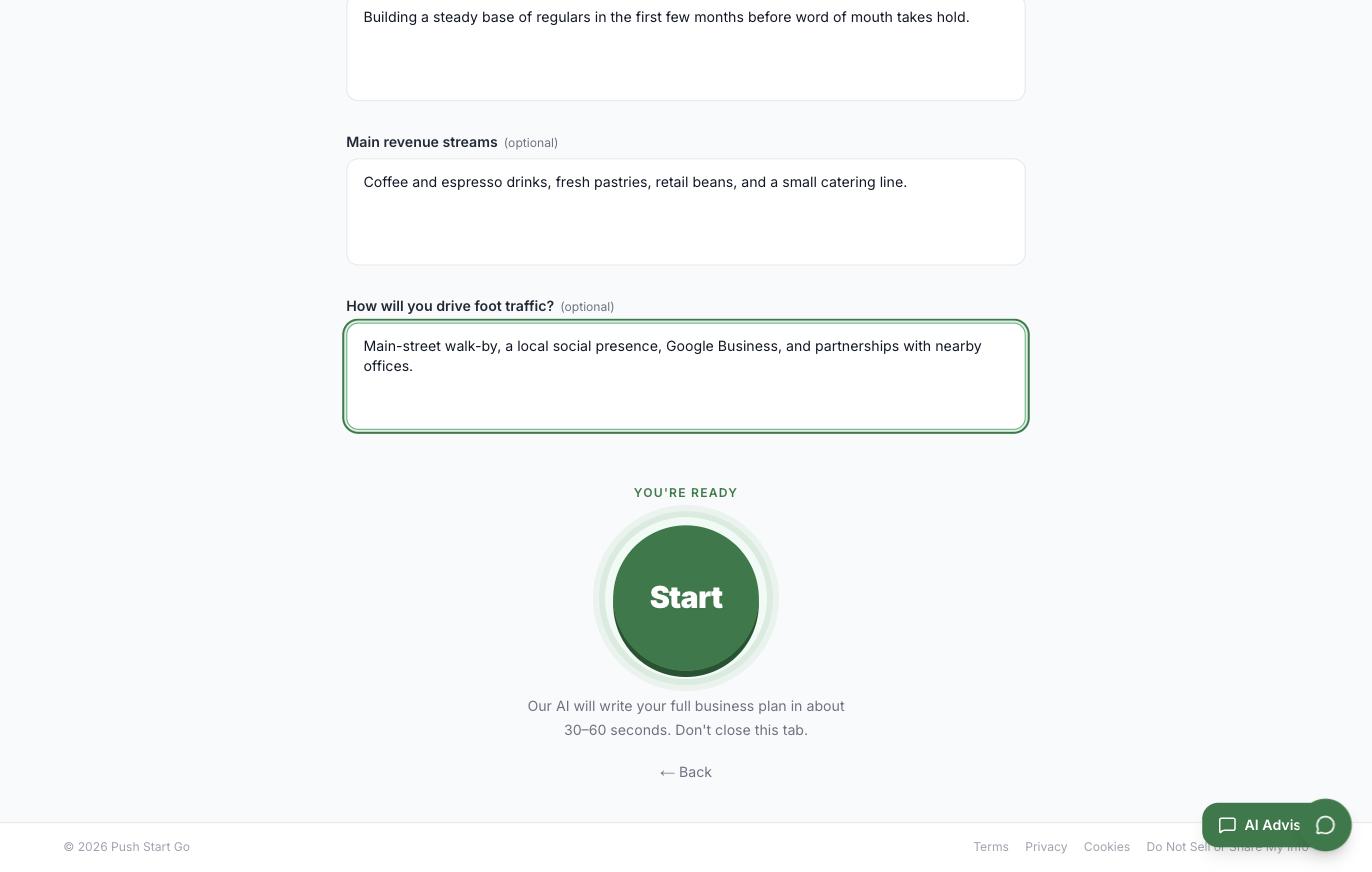
Press it, and the AI takes your answers and writes a full business plan in under a minute. You do not sit and format anything. The thinking you just did, in a handful of plain answers, becomes a structured plan you can read, share, and act on.
What you get: a plan, and then a project
Here is where PushStartGo stops being a plan generator and becomes something more useful. The finished plan opens with a real executive summary and the sections a business plan should have, written from your answers.
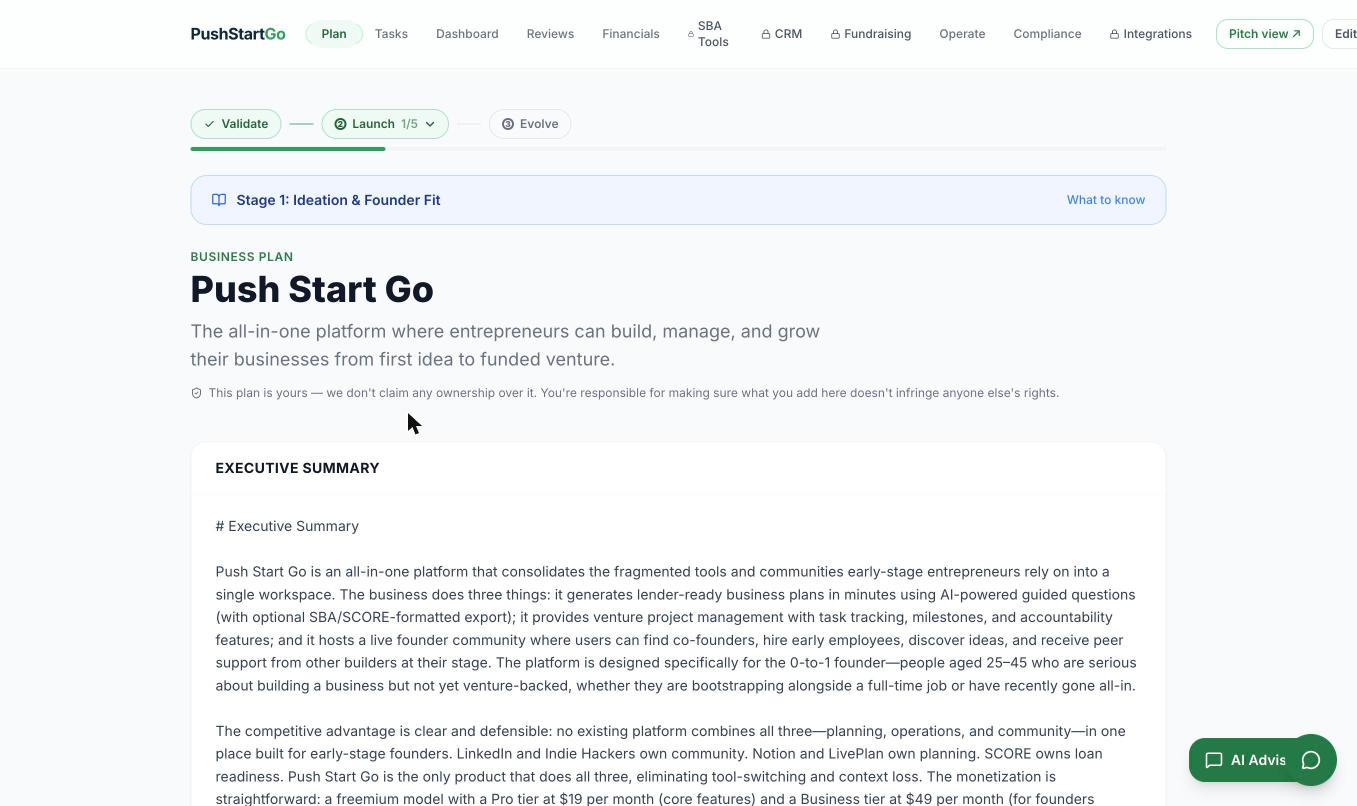
Look at the top of that screen, though, because that is the whole point. The plan is one tab. Beside it sit Tasks, a Dashboard, Financials, a CRM, and the rest of the workspace where a business actually gets run. Your plan is broken into a project with concrete next steps, so instead of a document you admire and forget, you get a clear list of what to do first, then next, then after that.
Each of those areas does a real job. Tasks holds your prioritized next steps, the project the plan became. The Dashboard shows where things stand at a glance. Financials is where you keep the numbers honest as real money starts to move. The CRM keeps your leads and customers in one place so none of them slip through the cracks. There is an education center for the parts you have not done before, and a community to find a co-founder, a first hire, or other founders at your stage. The plan is what points you. These are where the business actually gets built.
That is the difference worth understanding. A business plan, on its own, has never earned a dollar or served a customer. It is a guess about a world it has not touched yet. PushStartGo treats the plan as the starting line, not the finish, and turns it into the work that actually builds the business. If you want the longer argument for why that matters, it is here: you cannot plan your way to a business.
You can change anything later
Nothing the wizard produces is locked. The plan is a living document, and so is the project it becomes. As you talk to customers and learn what is actually true, you update your answers and the plan and the tasks move with them. The first version is a strong starting point, not a final verdict, which is exactly how a plan should work.
Tips for answering well
A few small habits make the plan that comes out noticeably better.
Answer like you are talking to a smart friend, not filling out a government form. Plain, specific answers produce a plain, specific plan, while vague answers produce a vague one.
Be honest about the parts that are not figured out yet. If your biggest challenge is that you do not know how to reach customers, say so. The plan is more useful when it knows where the real gaps are.
Do not treat any answer as final. The best founders revisit the plan as they learn, and PushStartGo is built for exactly that. When real customers teach you something, you update the plan and the project updates with it. There is more on that habit in why a business plan is not just for starting.
Do not rush the questions that look obvious, either. The one-sentence pitch and the problem you solve seem simple and are the hardest to get right, which is exactly why they deserve a real minute of thought. A sharp answer there makes every section that follows sharper.
From an hour of dread to a minute of clarity
The reason most people never write a business plan is that the blank page feels like a wall. The reason most plans that do get written end up in a drawer is that a document does not tell you what to do on Tuesday morning. PushStartGo answers both problems at once: it makes the plan easy to produce, and then it turns that plan into the next real move.
That is what makes the wizard worth the five minutes. It is not only that it saves you from writing a document, though it does that too. It is that it takes the thinking you were avoiding and turns it into a plan and a set of steps, so the very next thing you do points somewhere real.
Answer the questions, let it write the plan, and then start working the project it hands you. When you are ready, open the venture wizard and build yours.